Do I Need A Boating Licence In Canada?
YES! Excluding the Northwest Territories or Nunavut, all persons who operate a recreational motorized pleasure craft in Canada must carry a Transport Canada Pleasure Craft Operator Card (PCOC) commonly referred to as a boating license or equivalent proof of competency on board.
Get Your Boating Licence in 3 Easy Steps.
Step 1

Boater Registration
- Our course is Transport Canada Approved and was designed with you in mind. It is our intention to provide you with the best online safe boating educational course available.
- The One-time fee of $32.99 plus tax includes:
- Full access to the Online Study Guide.
- Access to the OFFICIAL Transport Canada PCOC test.
- Your electronic and printable temporary PCOC certificate.
- Mailing of your PERMANENT LIFETIME PCOC.
- There are no additional or hidden fees!
- When prompted for payment, the system will accept Visa credit /debit cards and Mastercard credit /debit cards.
- TRY THE FIRST FEW VOYAGES FOR FREE! ?
 Step 2
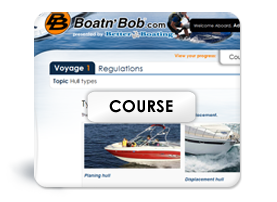
Complete the Course
-
You could complete the mandatory timed online course and quizzes in as little as four hours.
-
Sit back and study at your own pace; you do not have to complete the course in one sitting.
-
Once you have completed the course you will be directed to the Transport Canada PCOC Test.
Step 3
 Complete the Open Book Test and Print Your Temporary License
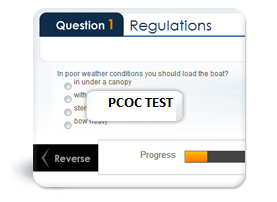
The Transport Canada PCOC Test is timed at 75 minutes and consists of 50 multiple choice questions, a pass mark is 75%. The Transport Canada Test is OPEN BOOK! This means you can reference the online safe boating educational study guide at the same time as you read the Transport Canada Test questions.
If you are unsuccessful on your first attempt, you must wait 24hrs before attempting the Transport Canada Test again. The second attempt must be completed within 30 days of the first attempt. Unfortunately failure to successfully complete the second attempt of the Transport Canada Test within 30 days of the first attempt will require you to complete the online course in its entirety.
Don't worry retries are free and unlimited!
Don't be nervous we helped write the final test questions!
Getting Your Card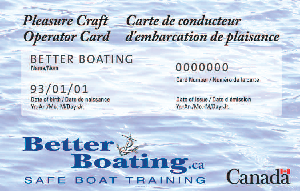
Once a score of 75% is achieved you can print your Better Boating Safe Boat Training ® temporary certificate and GET OUT ON THE WATER! Your permanent boating licence will arrive within 3 to 6 weeks.
Start Your Boating Education Adventure Now ?
What to Expect from Our Transport Canada-Approved Online Boating Course!
Better Boating Safe Boat Training ® is accredited by Transport Canada to deliver boating safety courses and administer tests for the issuance of Pleasure Craft Operator Cards, including replacement cards, under the Competency of Operators of Pleasure Craft Regulations.
Join Boatn’Bob ® and friends, while becoming educated and entertained at the same time. Our course will take you from feeling like a deck hand to realizing your potential of safely and confidently captaining a vessel.

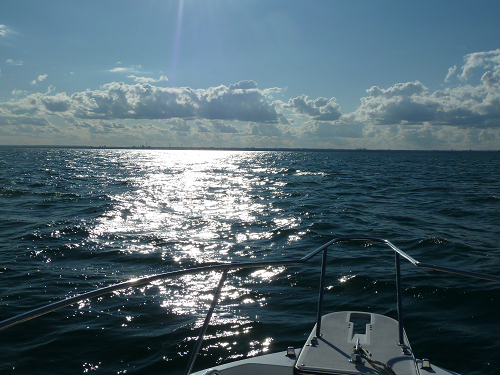 One official referred to the Better Boating Safe Boat Training ® safe boating online course as the most educational course they had taken! Once registered you will be granted access to the complete online study course and you may TRY THE FIRST FEW VOYAGES FOR FREE!
Logging In and Out
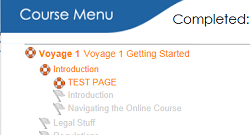
Study at your own pace as there is no worrying about logging in and out, we keep track of your progress and return you to where you left off. Speed demons could complete the timed course in as little as 4 hours! Regardless of your study pace, the minimum 3 hours of course study time and the Transport Canada Test must be completed within one year from the date of registration.
Safe Boating Topics Include:
-
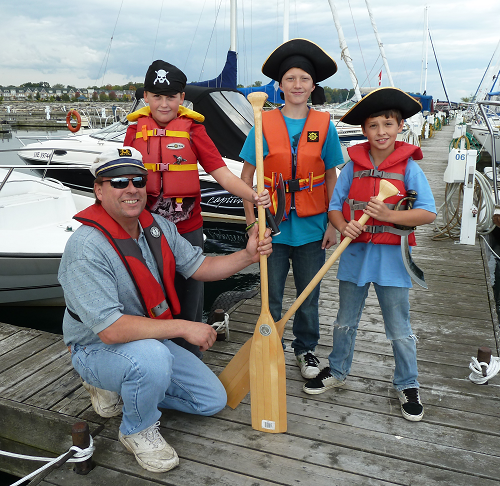
Laws regarding boating.
-
Mandatory Equipment familiarization and maintenance.
-
How to prevent boating emergencies.
-
Rules of the road.
-
Purpose and familiarization of aids to navigation.
-
Responding to boating emergencies.
Entertaining and Safe Boating Education
We use a variety of illustrations, animations and photographs to demonstrate the importance of safe boating education in the Better Boating Safe Boat Training ® safe boating online course.
|
|
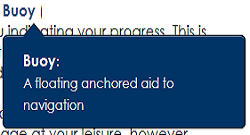
| POP-UP definitions help you learn and retain the boating lingo! |
 |
|
| Fantastic graphics and Interactive just for fun knowledge quizzes help you learn and retain the information. |
Voyage Quizzes
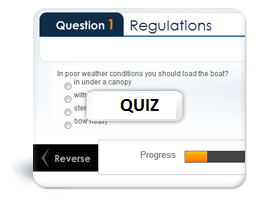 To assist you in retaining safe boating knowledge each voyage is followed by a multiple choice ten question quiz. You must achieve a minimum mark of 80% prior to commencing the next voyage. Should you fail a voyage quiz, you are required to redo only that FAILED voyage and quiz prior to moving onto the next voyage.